


Dyshidrotic Eczema (Dyshidrotic Dermatitis)
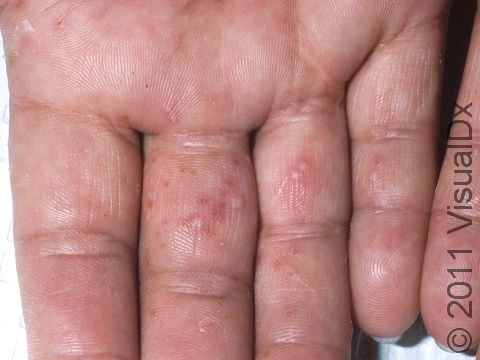
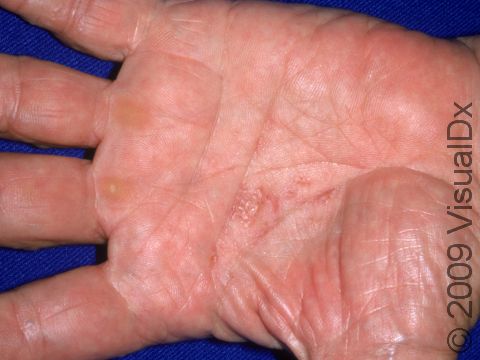
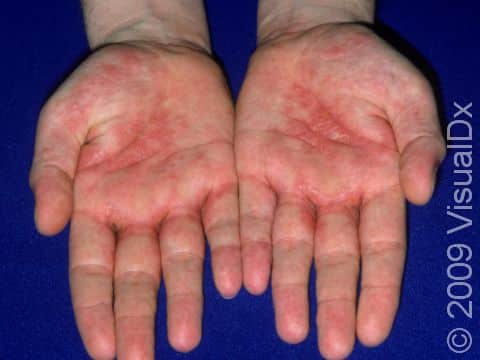
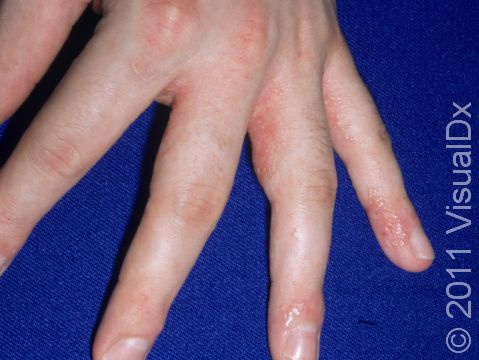
Dyshidrotic eczema (dyshidrotic dermatitis) is generally defined as an itchy rash limited to the hands (usually the palms and sides of the fingers) and/or the feet. Dyshidrotic eczema manifests as small, itchy, fluid-filled blisters. Its cause is unknown. Dyshidrotic eczema often comes and goes, with episodes more common in warm weather.
Who's At Risk?
Dyshidrotic eczema may occur in people of all ages but usually occurs after age 10.
Signs & Symptoms
The most common location of dyshidrotic eczema is on the hands and, less commonly, the feet.
- Small, tense, clear fluid-filled blisters are seen on the surfaces of the palms and soles and the sides of the fingers and toes.
- These blisters can appear “deep-seated” (tapioca-like) due to the thickness of the skin on the palms. In severe cases, lesions can merge together and present as large blisters (bullae).
- Redness (erythema) is typically mild or absent.
Self-Care Guidelines
Avoidance of irritants may be helpful. Handwashing with mild soaps and cleansers and frequent application of thick emollient creams and petroleum jelly may be beneficial.
Treatments
To manage dyshidrotic eczema, your physician may recommend soaks with drying agents if many blisters are present, as well as the removal of any potential irritating agents.
- Medium- and high-potency topical steroids may be prescribed to be used twice daily. Use of a high-potency topical steroid initially that is tapered to an as-needed basis may be most beneficial.
- An oral steroid (prednisone) can very effective and fast in controlling symptoms, but treatment with oral steroids is often less desirable, as tapering off the medication can result in severe flares of the disease.
- Chronic, severe disease can be treated with a form of ultraviolet light therapy called PUVA (psoralen and ultraviolet A) or narrow-band UVB (ultraviolet B) phototherapy administered by a dermatologist.
Visit Urgency
Seek medical evaluation for a rash on the hands and/or feet that is unresponsive to self-care measures.
Trusted Links
References
nia, Jean L., ed. Dermatology, pp.582. New York: Mosby, 2003.
Freedberg, Irwin M., ed. Fitzpatrick’s Dermatology in General Medicine. 6th ed, pp.32. New York: McGraw-Hill, 2003.
Last modified on October 10th, 2022 at 4:11 pm
Not sure what to look for?
Try our new Rash and Skin Condition Finder