
Hair Loss (Alopecia Areata)
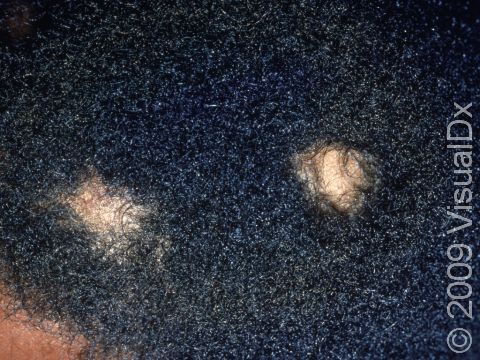
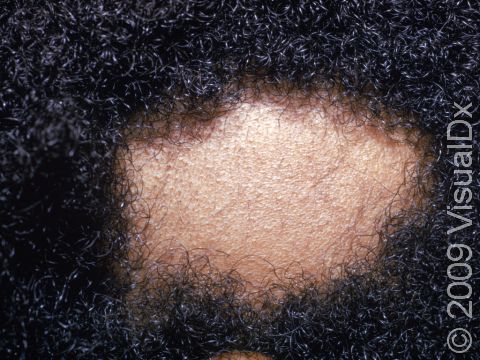
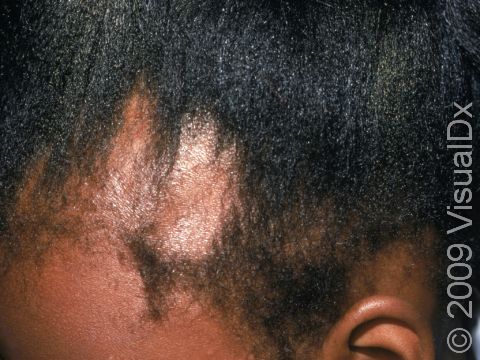
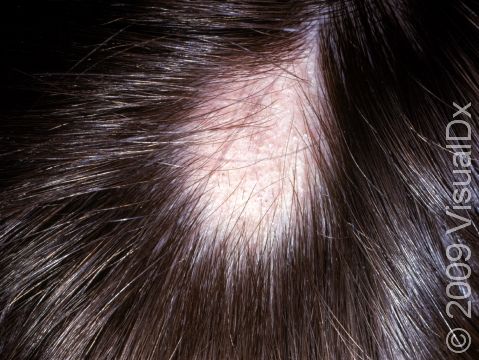
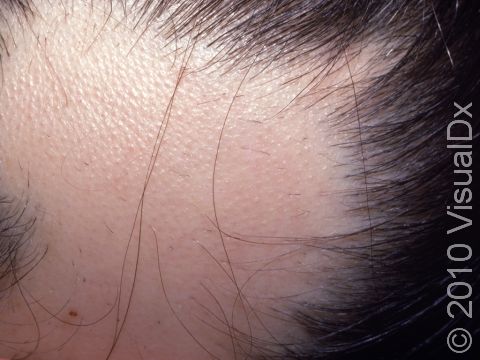
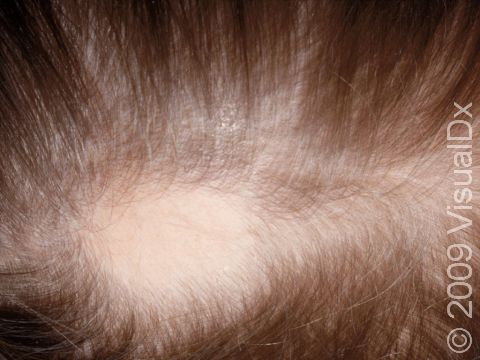
Alopecia areata is caused by a reaction from a person’s own immune system (an autoimmune condition) resulting in hair loss. The immune system of the body, for unknown reasons, mistakenly stops growing hair. Hair usually grows back on its own (spontaneously), though the hair loss often happens again. Hair loss may be patchy or more widespread (diffuse) and may affect the scalp as well as the body. Hair loss may be seasonal. There is no long-term cure for hair loss, and the causes can be both family-related (genetic) and related to outside (environmental) exposures.
Who's At Risk?
Hair loss is seen in people of all ages. It most often occurs in people with thyroid disease, although people with lupus, lichen planus, vitiligo, and Down syndrome are also more likely than others to experience hair loss.
Signs & Symptoms
Hair loss most commonly occurs on the scalp, but it can affect the eyebrows, eyelashes, beard, and other body areas.
Alopecia areata appears as patchy areas of non-scarring hair loss and may be considered:
- Mild – 1–5 scattered areas of hair loss on scalp (and beard of adults)
- Moderate – More than 5 scattered areas of hair loss on the scalp (and beard of adults)
- Severe – Loss of all of the hair on the scalp and body
Scalp burning, without redness, may also occur.
Hairs that grow back often have less color (hypopigmented or white) either temporarily or permanently. This hypopigmentation is not seen in other forms of alopecia.
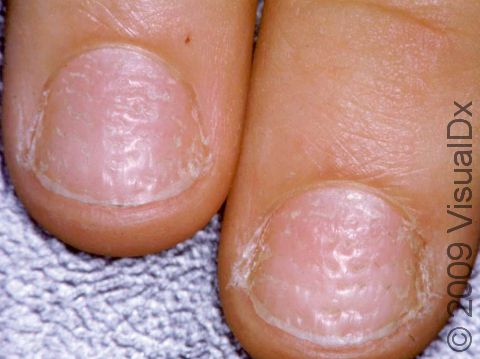
Pits and ridges in the fingernails can also occur.
Self-Care Guidelines
It is important to encourage your child and provide emotional support. Wigs or caps may be worn to hide the hair loss.
Treatments
The doctor may prescribe topical or oral (systemic) medications as well as injections. Steroid injections may help speed up hair regrowth in children with mild-to-moderate conditions:
- A powerful (potent) topical steroid (Clobetasol propionate gel or solution) can be applied twice daily, with or without covering the area (occlusion) overnight.
- Anthralin cream 1%, a topical medicine, can activate (stimulate) the immune system to speed up healing. Apply this medication to the affected area and about 1 cm beyond the border for 10–20 minutes, and then wash it off with shampoo.
For more extensive disease, your doctor may expose the affected area to light or apply topical steroids plus minoxidil, each used twice daily. This treatment must be used carefully if minoxidil is used in young children because of the risk of extensive side effects.
Oral of injected (systemic) steroids, such as prednisone, may be effective, but they do not provide long-lasting improvement.
Other treatments, currently in clinical studies, may be recommended.
Visit Urgency
See your child’s primary care doctor or a dermatologist if you notice areas of patchy hair loss anywhere on your child’s body.
References
Bolognia, Jean L., ed. Dermatology, pp.1035-1038. New York: Mosby, 2003.
Freedberg, Irwin M., ed. Fitzpatrick’s Dermatology in General Medicine. 6th ed, pp. 641-643, 647. New York: McGraw-Hill, 2003.
Last modified on August 16th, 2022 at 2:45 pm
Not sure what to look for?
Try our new Rash and Skin Condition Finder