
Presented by:


Psoriasis Resource Center

A classic psoriasis plaque on the elbow, which illustrates the sharp borders and silvery scale of the skin lesions that develop with this condition.
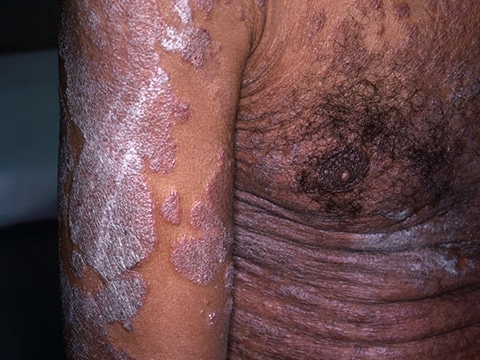
Large scaly lesions on the arm and trunk of a patient with typical plaque psoriasis. In darker skin colors, lesions of plaque psoriasis may appear pink, purple, silver, grayish, or dark brown.
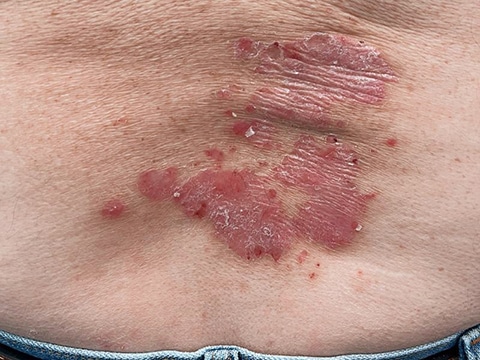
Red, scaly psoriasis plaques are common on the trunk, especially on the lower back near the crease of the buttocks.
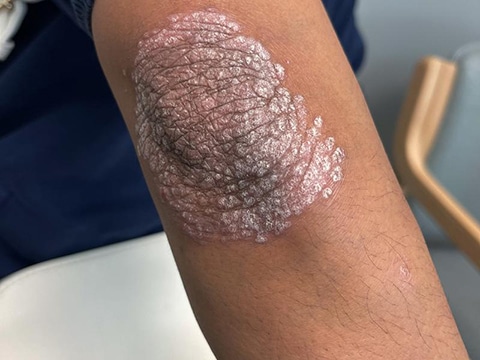
A classic psoriasis plaque on the elbow, which illustrates the sharp borders and silvery scale of the skin lesions that develop with this condition.
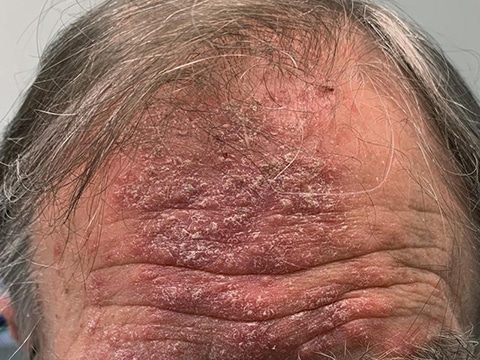
Psoriasis is commonly found on the scalp and may extend beyond the hair onto surrounding skin of the head, such as the forehead.
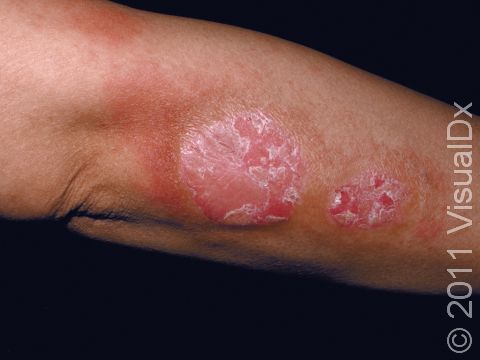
Psoriasis can have large, scaling, slightly elevated lesions. These lesions are usually found near or at the elbow as well as the forearm, knees, legs, scalp, buttocks, and genital areas.
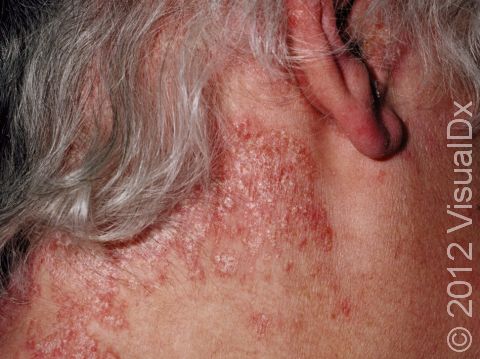
Psoriasis may involve large areas of scaling, such as on the neck and scalp.
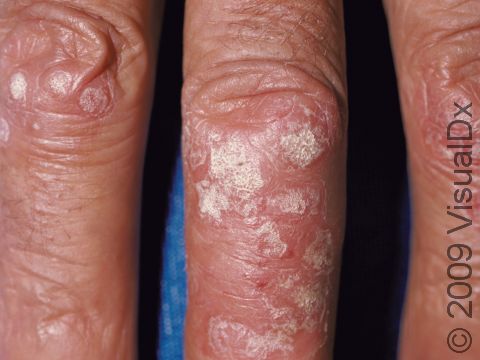
These small bumps and slightly elevated lesions have the typical white scale of psoriasis.
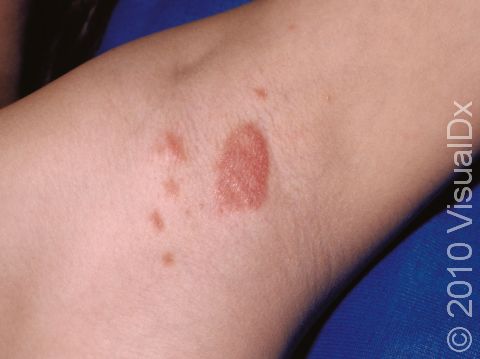
This image displays the fine, scaly, slightly elevated lesions in the armpit (axilla) in psoriasis.
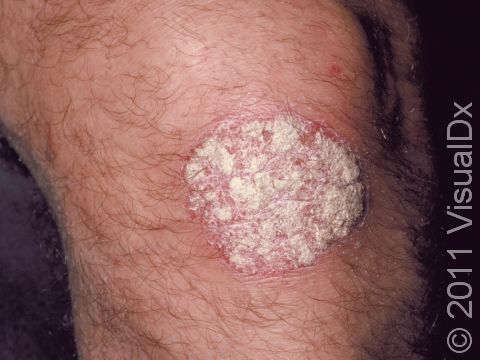
In psoriasis, this is a typical elevated lesion with white scale on the knee.
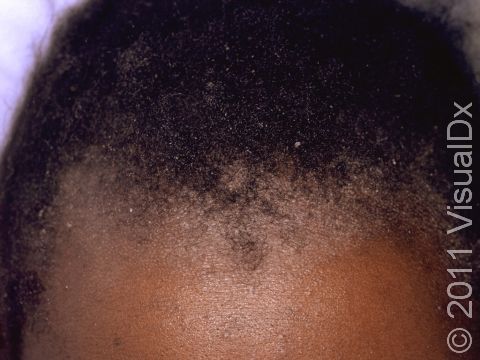
This image displays dry, scaly areas of the scalp typical of psoriasis.
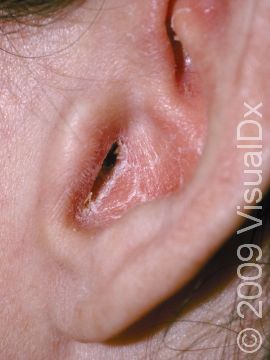
Psoriasis of the ear typically involves the ear canal and appears as redness with white scale.
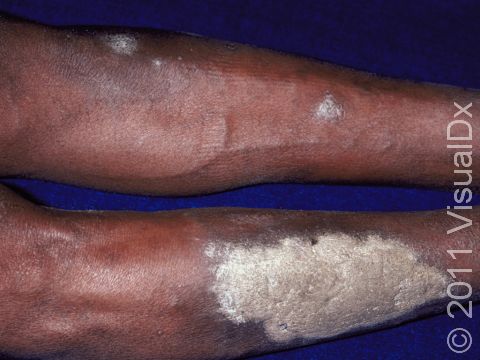
psoriasis_3093_lg.jpg?mtime=20161027102532#asset:162889
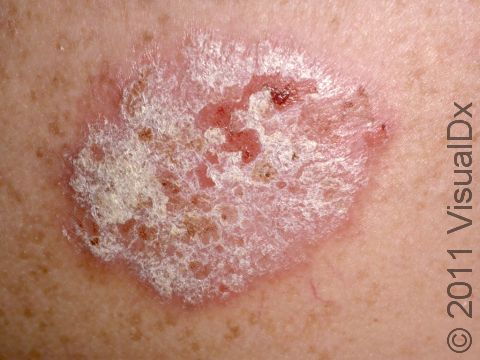
Psoriasis often has white, thick scale that comes off in "plates" when picked, causing bleeding.

Psoriasis can be slightly scaly with bright red, well-demarcated areas.
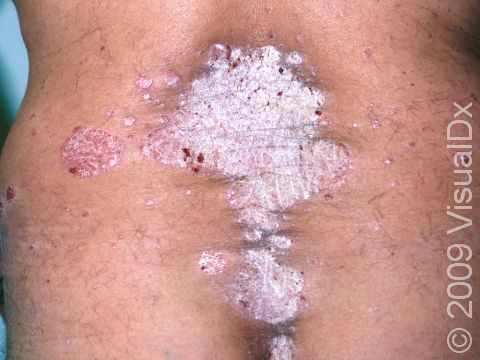
This image displays scaly, slightly elevated lesions on the lower back and buttocks, typical locations for psoriasis.
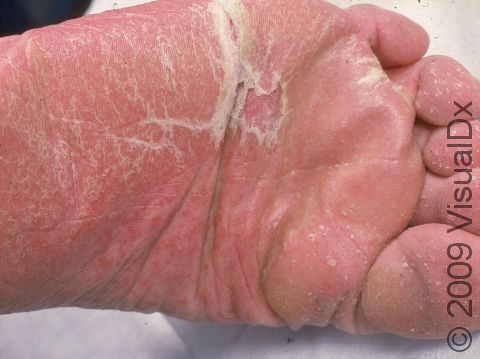
Pinkness and scaly skin can cover the soles when psoriasis is on the feet.
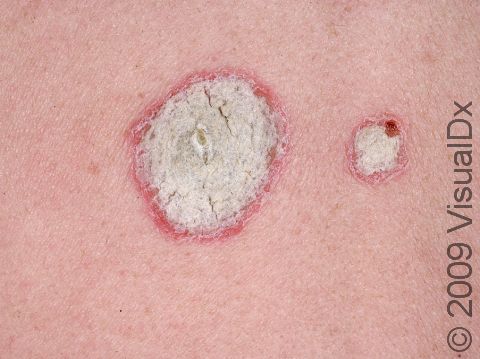
This image displays thick, white, scaly skin with redness underneath, typical of psoriasis.
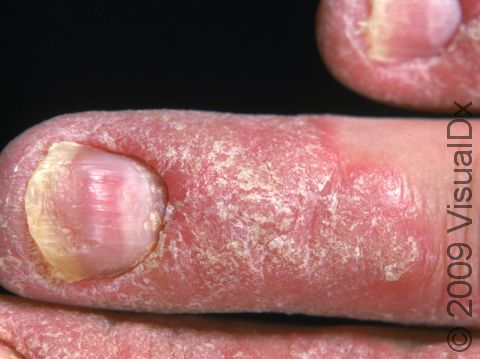
psoriasis_12271_lg.jpg?mtime=20161027102532#asset:162854
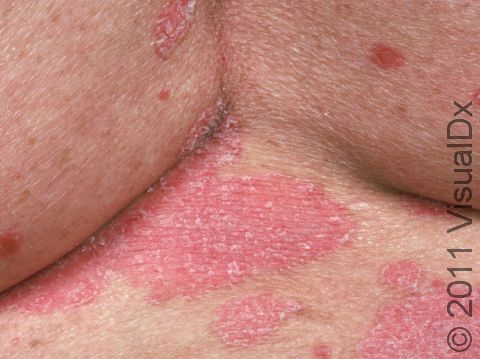
Psoriasis typically has bright red or pink circular, scaling patches, which may be seen anywhere on the body.
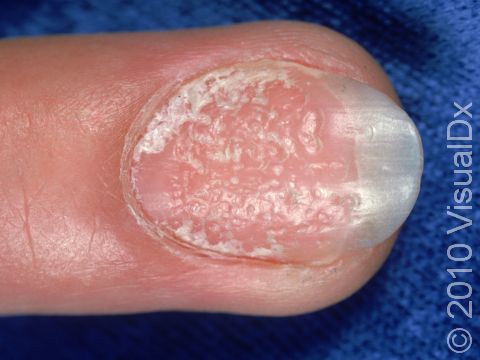
This image displays pits, roughness, and lifting of the tip of the nail tip typical of psoriasis of the nail.
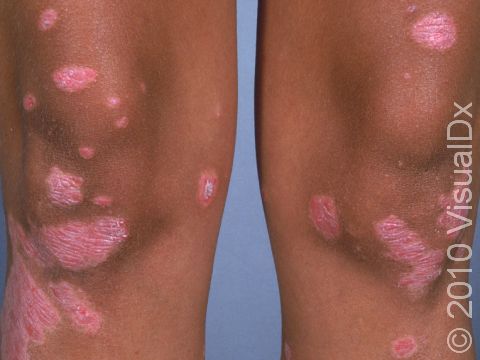
Psoriasis typically has multiple areas of skin involvement with lesions clustered on or near the knees.
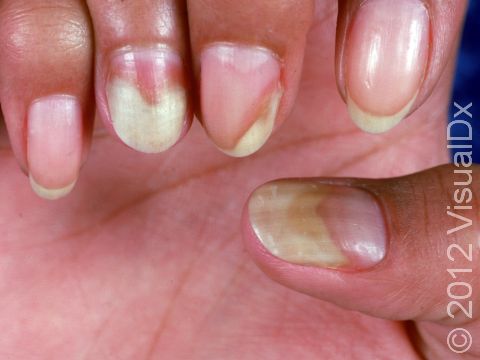
This image displays yellow, lifted nails from onycholysis, which is frequent in psoriasis.
Graphic content
Please click to view.
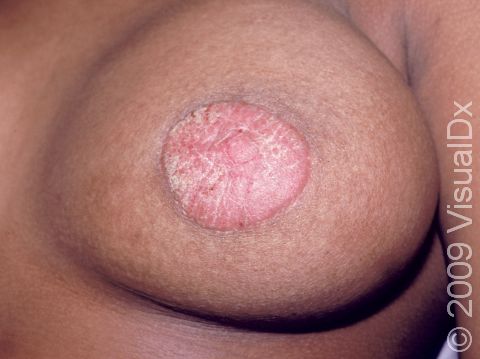
This image displays psoriasis of the areola and nipple.
Graphic content
Please click to view.
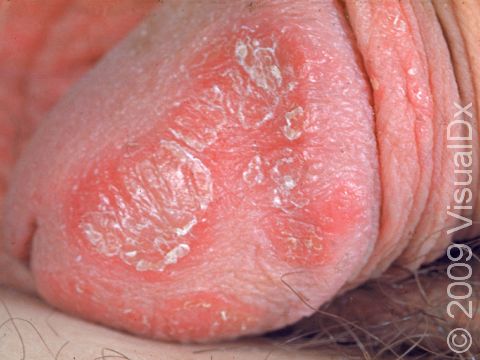
This image displays the scaly redness of the skin typical of psoriasis.
Graphic content
Please click to view.
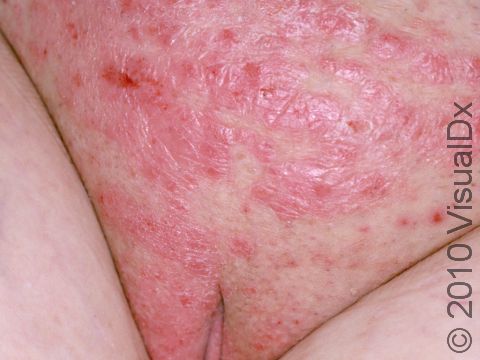
Psoriasis frequently occurs in the genital area of men and women. Psoriasis is not contagious and is not spread sexually.
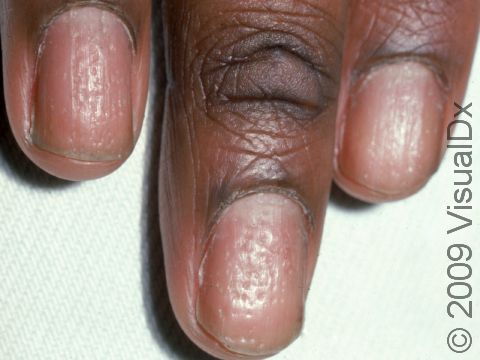
Numerous tiny nail pits are common in people with psoriasis.
Graphic content
Please click to view.
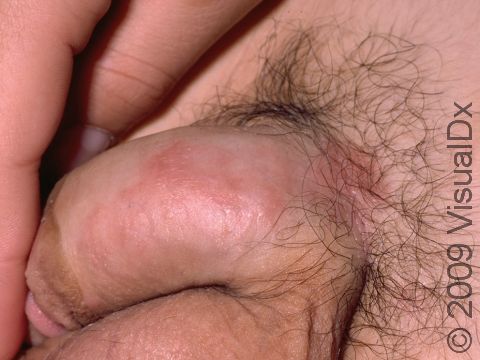
The scaling typical of psoriasis is also seen on the genitals.
Graphic content
Please click to view.
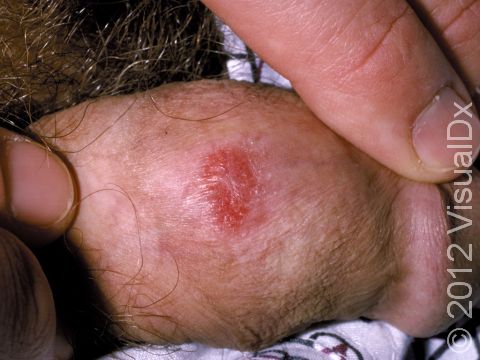
This image displays a red, scaly, slightly elevated lesion on the penis.
Graphic content
Please click to view.
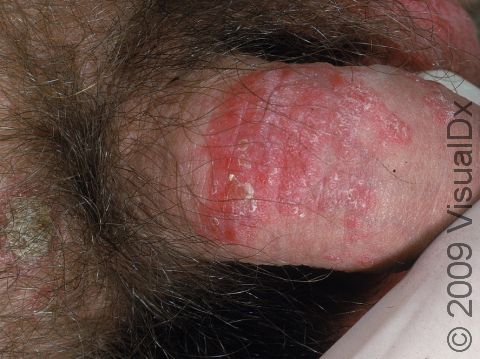
This image displays redness and scaly skin due to psoriasis.
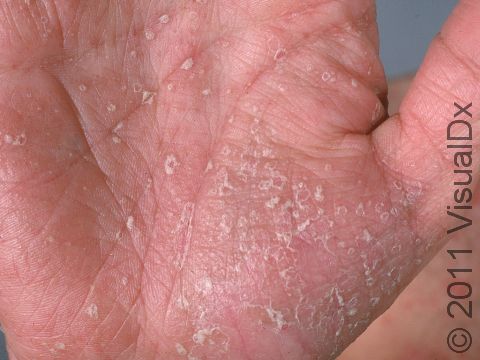
This image displays minimal scale with subtle redness due to psoriasis.
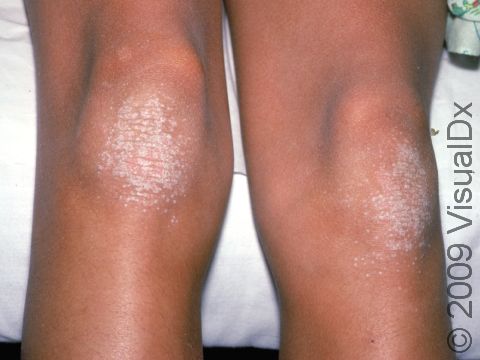
This image displays knees affected by psoriasis.
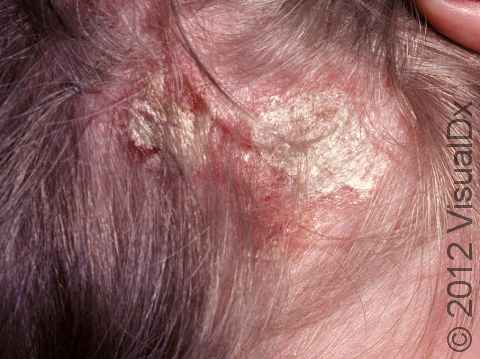
This image displays the thick, white, scaling area typical to psoriasis.
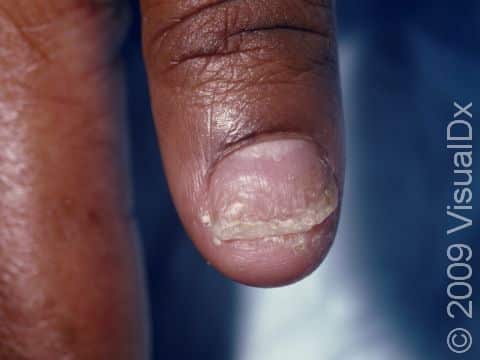
This image displays a nail that is lifting up (onycholysis) due to psoriasis.
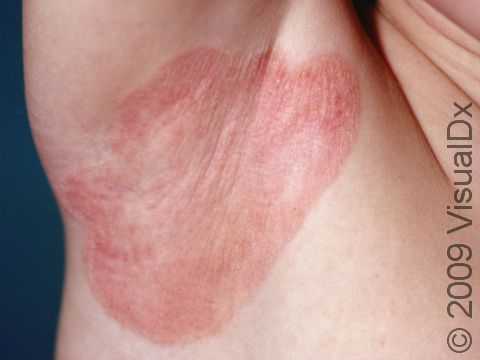
This image displays a large, red, scaly, slightly elevated lesion of psoriasis in the armpit.
Graphic content
Please click to view.
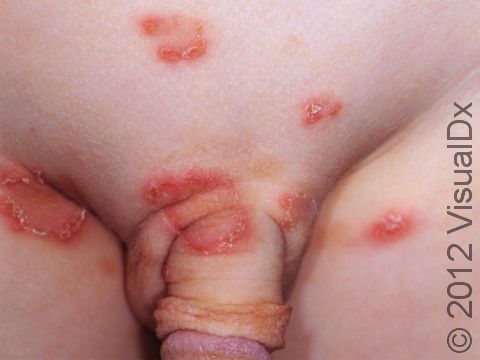
Psoriasis is common in the genital region, where the scaling is not as prominent due to moisture in this region.
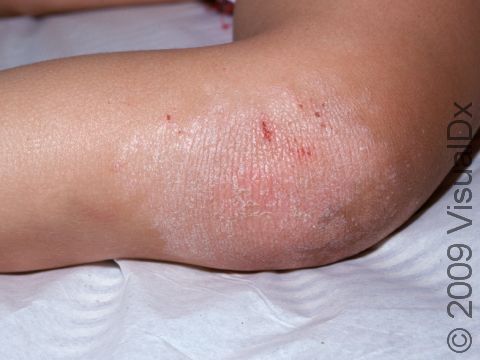
This image displays a knee affected by psoriasis.

Redness and silver-looking scaling often affect the scalp and hairline with psoriasis.

Psoriasis can be displayed as smaller, scattered patches.
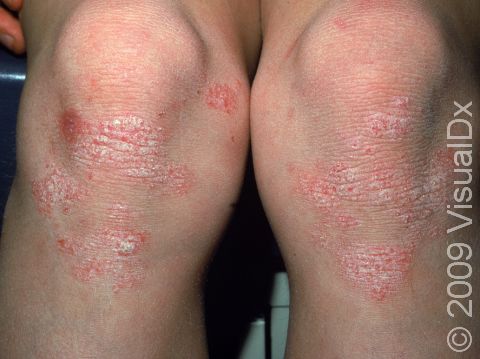
This image displays psoriasis affecting the knees due to excess friction from play and sports.
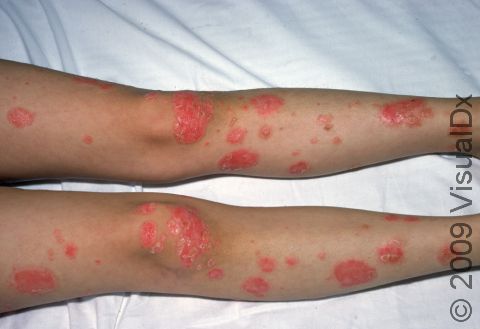
Redness and thick scaling of the slightly elevated lesions is common with psoriasis.
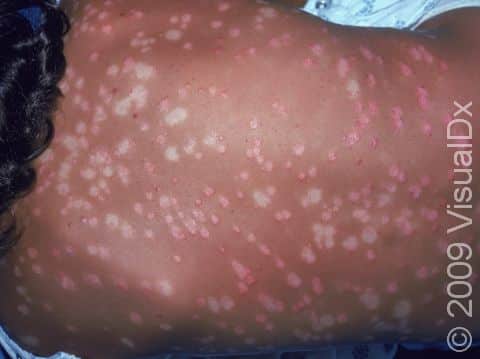
In darker skinned people, new areas of psoriasis are pink, while older areas are displayed as lighter, flat marks.
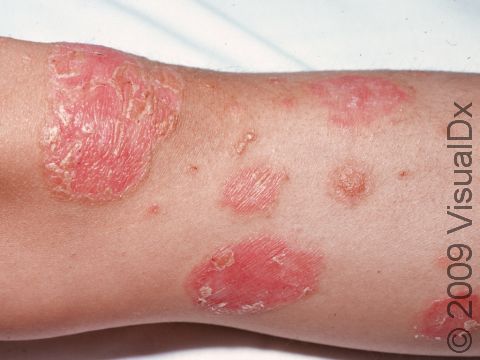
This image displays a close-up of the scaly, slightly elevated lesions of psoriasis, which often appear to come off in plates.
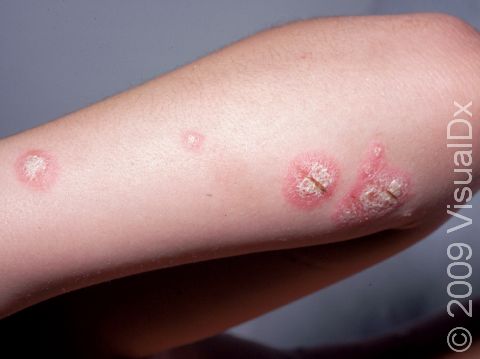
This image displays typical slightly elevation lesions of psoriasis with thick, white scale and redness.
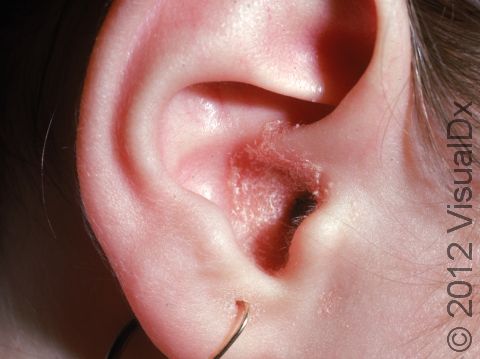
Typical redness and scaling of external ear canal psoriasis.

This image displays an extensive case of psoriasis that has been triggered by a strep infection.
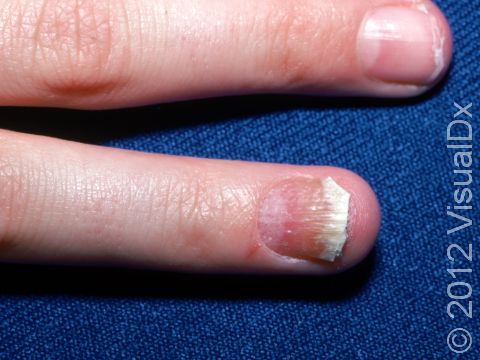
This image displays an uneven, pitted nail separated from the nail bed due to psoriasis.
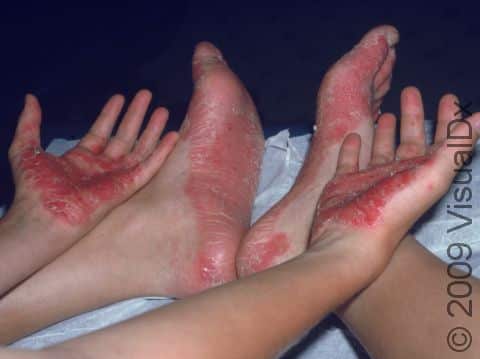
This image displays psoriasis that affects only the patient's palms and soles (palmoplantar psoriasis).
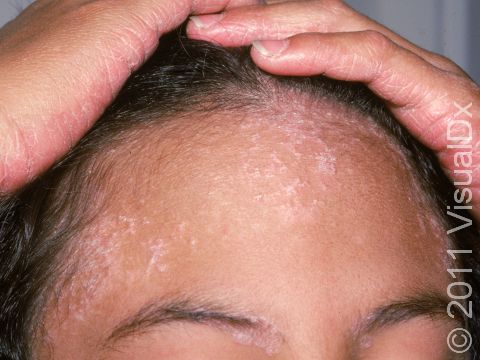
This image displays a forehead and scalp affected by psoriasis.
Graphic content
Please click to view.
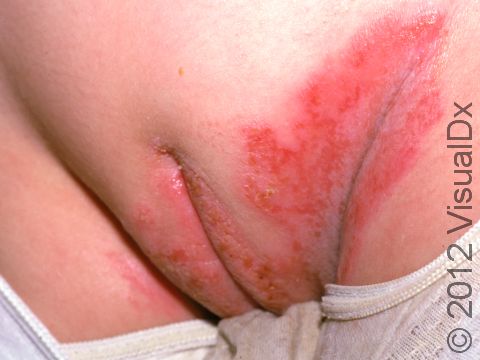
Psoriasis often affects the body folds and genitals with bright red patches that are not as scaly as other regions because of the moistness typical of this area.
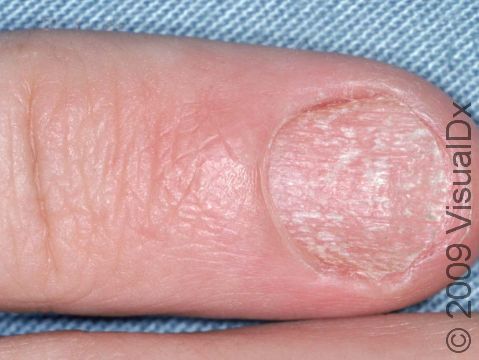
This image displays a nail affected with psoriasis.
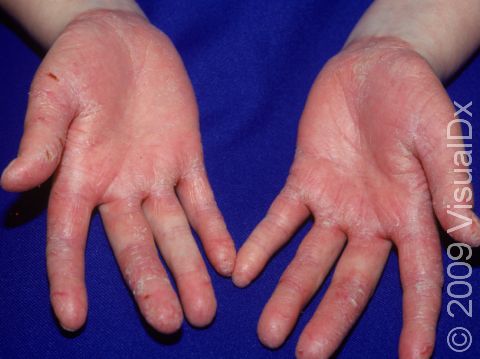
This image displays cracks in the skin of hands typical of psoriasis.

Psoriasis on the bottoms of feet may affect the instep of the sole as well as areas of friction.

This image displays dry, cracked skin typical of psoriasis.
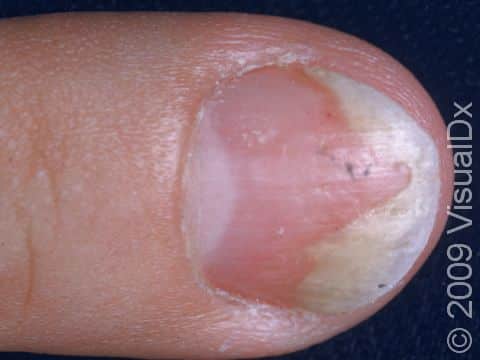
This image displays small pits and discoloration of the nail surface typical of psoriasis of the nail.
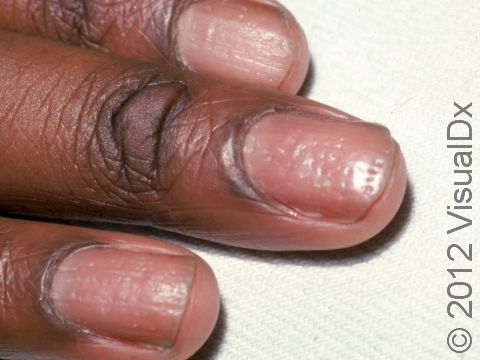
Psoriasis may be evident in the nails with multiple tiny, pit-like depressions of the nail plate surface.
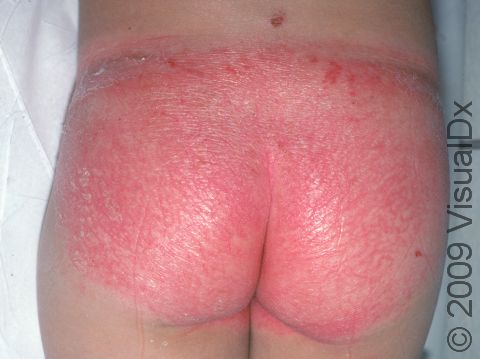
Psoriasis frequently is more severe on the buttocks.
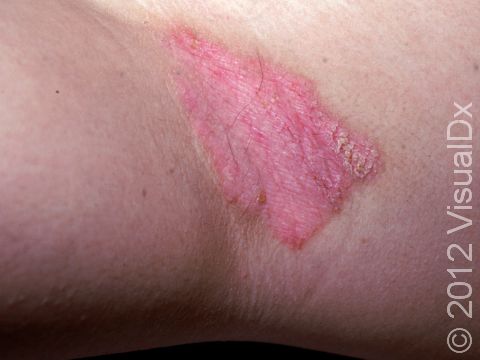
When psoriasis involves body fold areas (known as psoriasis inversus), there is not as much scaling due to moisture.
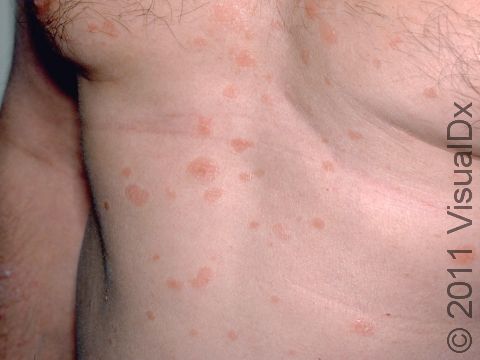
Psoriasis can also present with multiple smaller lesions that are widely distributed on the body.

This image displays the contrast between a nail affected by psoriasis (on the right) and one that is normal (on the left).
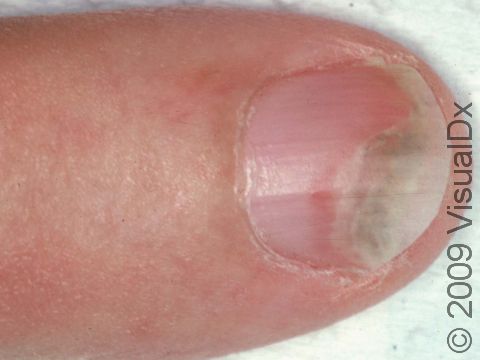
This image displays a separation of the nail from the bed (onycholysis) caused by psoriasis.
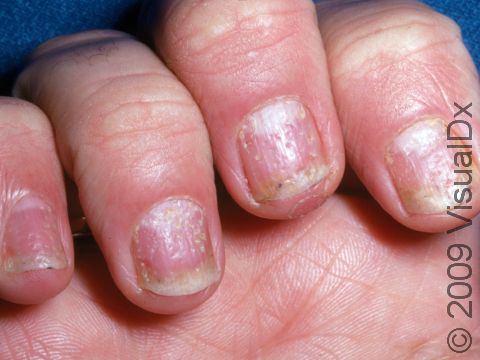
In addition to pitting of the nail surface, this patient with psoriasis has a yellowish discoloration and separation of the nail plate from the nail bed (onycholysis) of the free edges of the nails.
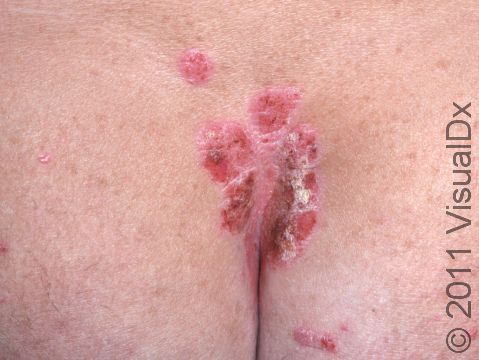
The sacral and buttocks cleft is a very common location for psoriasis.
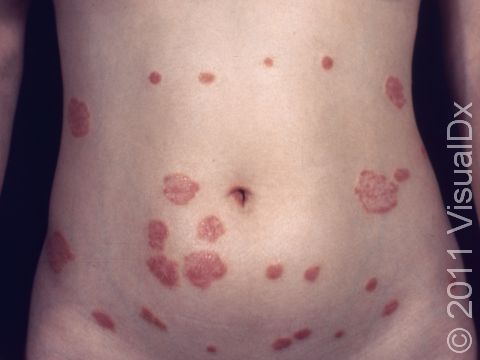
Psoriasis typically has sharp boundaries between normal skin and involved areas.
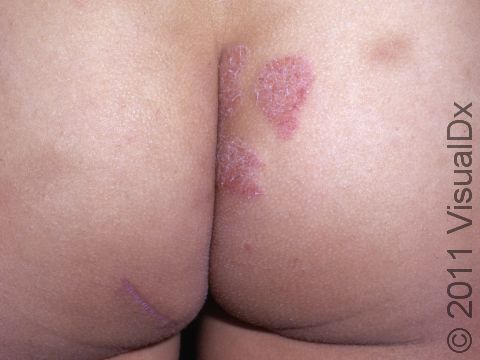
The buttocks are a common location for psoriasis.
Graphic content
Graphic content
Graphic content
Graphic content
Graphic content
Graphic content
Graphic content
Graphic content
Psoriasis
Psoriasis is a noncontagious, lifelong skin condition that affects about 2–3% of the population of the United States. People with psoriasis have thickened, red, and often scaly patches on their skin. Psoriasis is very likely to run in families, but it can also be triggered by certain situations, such as emotional stress, injury to the skin, infection, as well as taking certain medications. The exact cause of psoriasis is unknown, but it seems to be caused by errors in how the immune system functions.
Read More
Not sure what to look for?
Try our new Rash and Skin Condition Finder