
Halloween is coming up, and you  know what that means: creepy crawlers abound. While most spiders we see around this time are plastic, there are roughly 30,000 species of real spiders, and many of them are venomous. How can you know when you get a spider bite, and what should you do if you get bitten?
Only a few species of spiders have fangs that are strong enough to penetrate human skin. In the United States, venom from species of Loxosceles and Latrodectus produce well-known toxic effects. We will also discuss the tarantula’s unique means of attack.
Loxosceles:
The spider – This genus is typified by the L oxosceles reclusa, known as the brown recluse spider. It is also often referred to as the violin or fiddleback spider because of the violin-shaped marking on its thorax. It is found throughout the Southeastern and Midwestern US. Although its natural habitat is outdoors under dry overhanging rocks or trees, it can also crawl indoors and live in protected spaces (think closet, attic, or basement). While it is usually timid, the brown recluse will bite if threatened or trapped. It hibernates during the winter, so most bites occur between March and October. Its venom contains various proteins that cause the skin to breakdown.
The bite – Usually painless initially, it may take 6 to 12 hours for you to even start noticing the effects of a brown recluse bite, which typically begin with pain, severe swelling, and large blisters at the site of attack. Reactions may range from mild hives to full-blown skin death. Few envenomations lead to such severe skin death, which usually occurs 2 to 3 days after the bite. Victims should look out for the typical “red, white, and blue” sign of a brown recluse bite: the center of the bite is gray to purple with a surrounding ring of blanched, white skin that is itself surrounded by a large area of redness. If you see this sign you will most likely feel pain due to skin death. Healing occurs slowly; a review of cases showed that wounds with over 1 cm of skin death required an average of 74 days to heal.
Help! – Treatment is controversial, as no intervention has been proven to change the natural course of a brown recluse spider bite. Rest, ice, and elevation help reduce redness and swelling. Cool compresses may reduce the venom’s effectiveness, decreasing the amount of skin death. If you develop an open sore, clean it daily and consider applying a topical antibiotic to prevent infection. Because treatment depends on the severity of your injury, see your doctor if you suspect you have been bitten by this spider.
Latrodectus:
The spider – The most famous fear-induci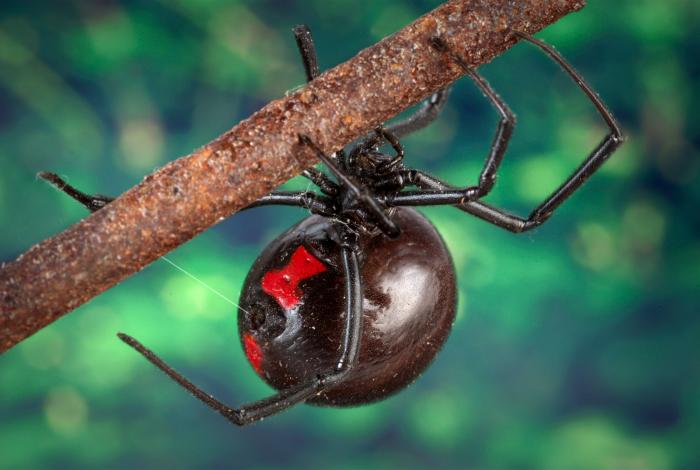 ng Latrodectus spider is L. mactans, commonly known as the black widow. This arachnid has a characteristic red hourglass on its belly. Females are significantly larger than males and, unlike males, are able to envenomate. The venom contains a neurotoxin that causes paralysis. Black widow spiders spin large, tangled webs and typically hide close to the ground, under debris or woodpiles, or in front of burrows. They wait for prey (flies, beetles, etc) to become entangled in their web and quickly paralyze them with their bite.
The bite – The bite itself often feels like a pinprick. Within in minutes, severe pain and cramping occurs and may spread through other parts of the body. There may be redness and swelling where the bite occurred. Systemic symptoms – those that affect the whole body, not just the site of the bite – are worst 1 to 8 hours after the bite and may last for a few days. Characteristically, these symptoms include muscle cramping, nausea, vomiting, and severe abdominal pain that may be mistaken for appendicitis. Death has been reported in less than 1 percent of cases.
Help! – The majority of cases involve only localized symptoms – those that affect only the body part bitten. Treatment is, therefore, mainly supportive (providing comfort and symptom relief) and usually does not require hospitalization. If, however, you experience muscle pain, sweating, nausea, vomiting, or a headache, go to your nearest emergency department as soon as possible. Once there, physicians can give you antivenom and support your airway, breathing, and circulation.
Tarantulas:
The spider – Tarantulas are among th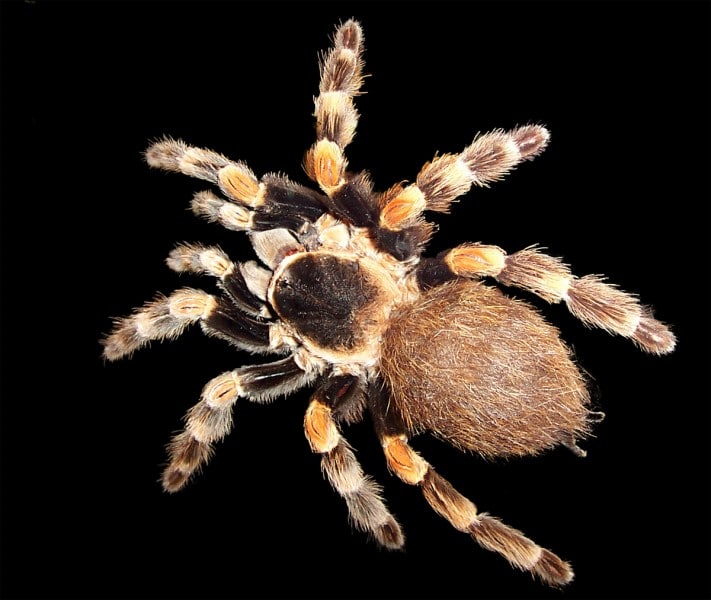 e largest spiders in the world, measuring up to 8 cm in length. Females can live up to 35 years, while males generally live for 5 to 7 years. They are found mainly in the tropical and subtropical climates of the southwestern US. Despite their panic-inducing appearance, tarantulas are nonaggressive and usually hide as their main line of defense.
The bite – Unlike other spiders, tarantulas rarely bite. When cornered or threatened, they use their hind legs to flick needle-like hairs off their belly. These hairs embed in the skin, causing a hive-like reaction with itching, swelling and redness. The victim’s eyes may also become irritated and sometimes require medical treatment. The risk of severe reactions is greater outside the US, where tarantulas with different hair types are found.
Help! – An antihistamine, such as Benadryl®, or an over-the-counter topical corticosteroid cream or ointment, such as hydrocortisone, usually helps to relieve itchiness and redness. Go to your nearest emergency department if you think you are experiencing a bad reaction.
Hopefully you’ll only be seeing plastic spiders this Halloween – but should you get too close to the real deal, you’ll know what to look out for!
Learn more about bug bites from Skinsight.
Image Credits: Spider Web: Wiki CommonsBrown Recluse Spider: Wiki Commons
Black Widow Spider: Wiki Commons
Tarantula: Wiki Commons
Last modified on October 18th, 2018 at 6:53 pm