
 In part one of the series, we looked at melanin and skin coloration, as well as several conditions common in skin of color.
As we discussed, melanin is the substance that gives color to your hair, eyes, and skin.
The summer is a great time to celebrate skin health, especially since we show it off more now than in other months. Although all skin types can be troubled with the same skin health issues, some conditions occur more often and/or are more difficult to diagnose in individuals with darker skin. These conditions include: melasma, vitiligo, keloids, and post-inflammatory hyperpigmentation.
In part two of this series we will look more closely at Keloids and post-inflammatory hyperpigmentation.
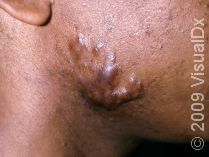
Keloids Keloids are a type of scar that appears after an injury to skin such as cuts and abrasions, piercing, acne, and surgical incisions. It is more common in African Americans, but it is unknown why this tendency exists. Keloids are usually firm, raised scars on the skin, which can appear bright red to bluish to black and are sometimes itchy. These scars tend to grow in size over time and can become unsightly.
There is no treatment that is extremely effective at eliminating keloids, but cortisone injections and cryotherapy (liquid nitrogen) can be used to reduce their size and appearance. Also excising the keloid, or “cutting it out”, can be an option, but this alternative carries the risk of recurrence. Read more about keloids here.
Post-inflammatory hyperpigmentation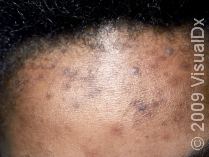 Post-inflammatory hyperpigmentation, or skin darkening, is a condition that occurs after some type of damage or trauma to the skin. This is an unpleasant coloring of the skin that can occur in the aftermath of conditions such as psoriasis, acne, lichen planus, and contact dermatitis. It can also arise from a drug eruption (medication reaction of the skin). The condition can last for weeks to months and is generally limited to the areas of inflammation.
Hydroquinone, or skin bleach, can be used to accelerate its disappearance from the skin. Sunscreen should also be used to prevent further hyperpigmentation and should, in fact, be used as a daily regimen. Read more about post-inflammatory hyperpigmentation here.
If you are affected by any of these conditions or would like more information on ways to keep your skin healthy, consult your dermatologist.
Reference:
Suurmond D. Section 9,13. Pigmentary Disorders and Benign Neoplasms and Hyperplasias. In: Suurmond D, ed. Fitzpatrick’s Color Atlas & Synopsis of Clinical Dermatology. 6th ed. New York: McGraw-Hill; 2009. http://www.accessmedicine.com/content.aspx?aID=5187746. Accessed February 11, 2013. .
Last modified on October 18th, 2018 at 6:47 pm