
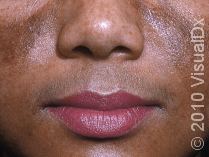
 What is melanin you ask? Well, melanin is the substance that gives color to your hair, eyes, and skin. The summer is a great time to celebrate skin health, especially since we show it off more now than in other months. Although all skin types can be troubled with the same skin health issues, some conditions occur more often and/or are more difficult to diagnose in individuals with darker skin. These conditions include: melasma, vitiligo, keloids, and post-inflammatory hyperpigmentation.
This two part series will look at several of the most common conditions associated with skin of color.
Melasma
Melasma is an acquired hyperpigmentation or darkening of the skin that occurs in sun exposed areas, including the face. It occurs most commonly in women during their reproductive years and has often been associated with the use of birth control pills. Melasma is a benign condition, but can be a big problem cosmetically.
There are available topical creams (containing hydroquinone or fluocinolone) that can be prescribed by your dermatologist to treat the condition. Melasma can be largely prevented or minimized through the use of daily sun protection with sunscreens that contain titanium dioxide and/or zinc oxide. Daily sunscreen is essential for all skin types, including African Americans, who may have the misconception that their higher amount of melanin (the substance that give color to skin and hair) will help to protect against the sun. Read more about melasma .
Vitiligo 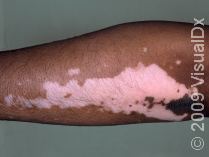 Vitiligo affects about 1% of the population worldwide, and occurs in all races, but tends to appear more dramatically in darker skin. Although it is only a skin problem and not contagious, it has been stigmatized in many cultures around the world. Vitiligo is a progressive lightening of patches of skin due to destruction of melanocytes (pigment producing cells). Unlike melasma, vitiligo is a more serious and chronic condition and is related to autoimmune disease, or diseases where the immune system attacks healthy cells in the body. However, not all loss of pigmentation is associated with vitiligo.
There have been many advances in the treatment of vitiligo and the main goal of therapy is to return the skin to its original color. Sunscreens, cosmetic cover-ups, and repigmentation with the use of topical steroids and excimer laser, are therapies used alone or in combination to manage the condition. Read more about vitiligo .
Join us for part two of this series where we will discuss keloids and post-inflammatory hyperpigmentation.
Insights from Cara Quant, UCLA medical student
—-
If you are affected by any of these conditions or would like more information on ways to keep your skin healthy, consult your dermatologist.
Reference:
Suurmond D. Section 9,13. Pigmentary Disorders and Benign Neoplasms and Hyperplasias. In: Suurmond D, ed. Fitzpatrick’s Color Atlas & Synopsis of Clinical Dermatology. 6th ed. New York: McGraw-Hill; 2009. http://www.accessmedicine.com/content.aspx?aID=5187746. Accessed February 11, 2013.
Last modified on October 18th, 2018 at 6:47 pm